Our Research
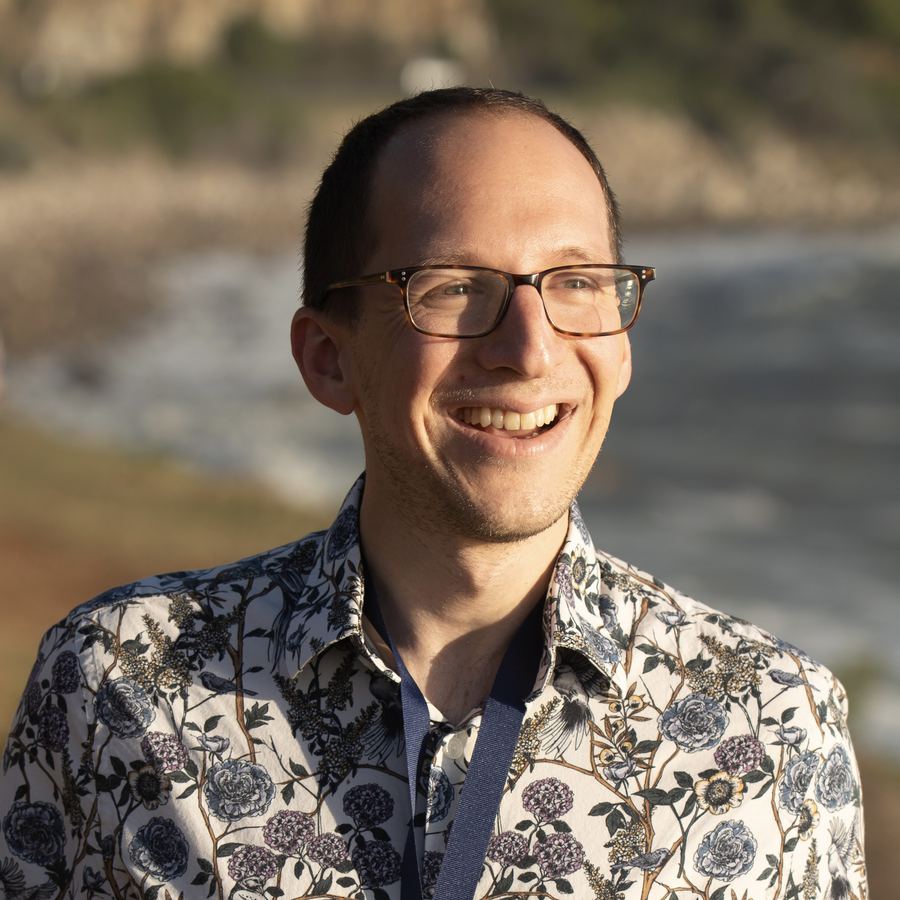
Michael Diamond, Assistant Professor of Meteorology, Department of Earth, Ocean, and Atmospheric Science, Florida State University
Clouds confound our understanding of climate change.
Clouds influence and are influenced by processes occurring on scales ranging from nanometers and seconds to hundreds of kilometers and years, making causal interpretation of cloud changes extremely challenging.
To address these issues, my group utilizes a diverse set of tools ranging from in situ aircraft observations to geostatistical analyses of satellite retrievals to numerical modeling at the cloud, regional, and global climate scales.
Natural Experiments
I am particularly interested in identifying cases of (presumably) clear causality, or “natural experiments,” and learning both what they can teach us and the limits of applying those lessons more broadly. Recent projects involving natural experiments have included:
- Using changes in ship traffic around Africa due to Houthi militia attacks to constrain how recent regulations cleaning up marine fuels have affected cloud formation in Diamond & Boss (2025).
- Testing hypotheses about how clouds may adjust to keep sunlight reflection equal between the Northern and Southern Hemispheres with observed asymmetric clear-sky perturbations like the decline of Arctic sea ice and volcanic eruptions in Diamond et al. (2024).
Climate Inverventions
I am also interested in addressing urgent policy-relevant questions related to proposals for deliberate stratospheric aerosol injection or marine cloud brightening to offset some effects of global warming. Recent projects related to sunlight reflection methods include:
- Outlining the scales of outdoor experimentation needed to understand the feasibility of marine cloud brightening and how the environmental implications (or lack thereof) depend on scale in Doherty, Diamond, et al. (2026).
- Evaluating whether stratospheric aerosol injection would reduce the need for adaptation due to changing climate zones compared to unabated warming or if global drying and changing regional temperature patterns would require just as much adaptation to changing climate zones (spoiler: it's the former) in Brunelli & Diamond (2026).
Other Interests
My mind wanders widely... rather than try to fit some of the other fun projects into a specific box, here's a taste of what else we're working on:
- Exploring whether hot rocks underground could produce enough sulfur to play a role in past mass extinctions, like the one that led to the rise of the dinosaurs, in Stewart, Diamond, & Allman (2026).
- Attributing historical multi-decade swings in Atlantic sea surface temperatures to the interplay of aerosol and greenhouse gas forcing rather than internal ocean-atmosphere oscillations in Freveletti, Diamond, & Jnglin Wills (2026).